Review: Tell Me the Dream Again by Tasha Jun
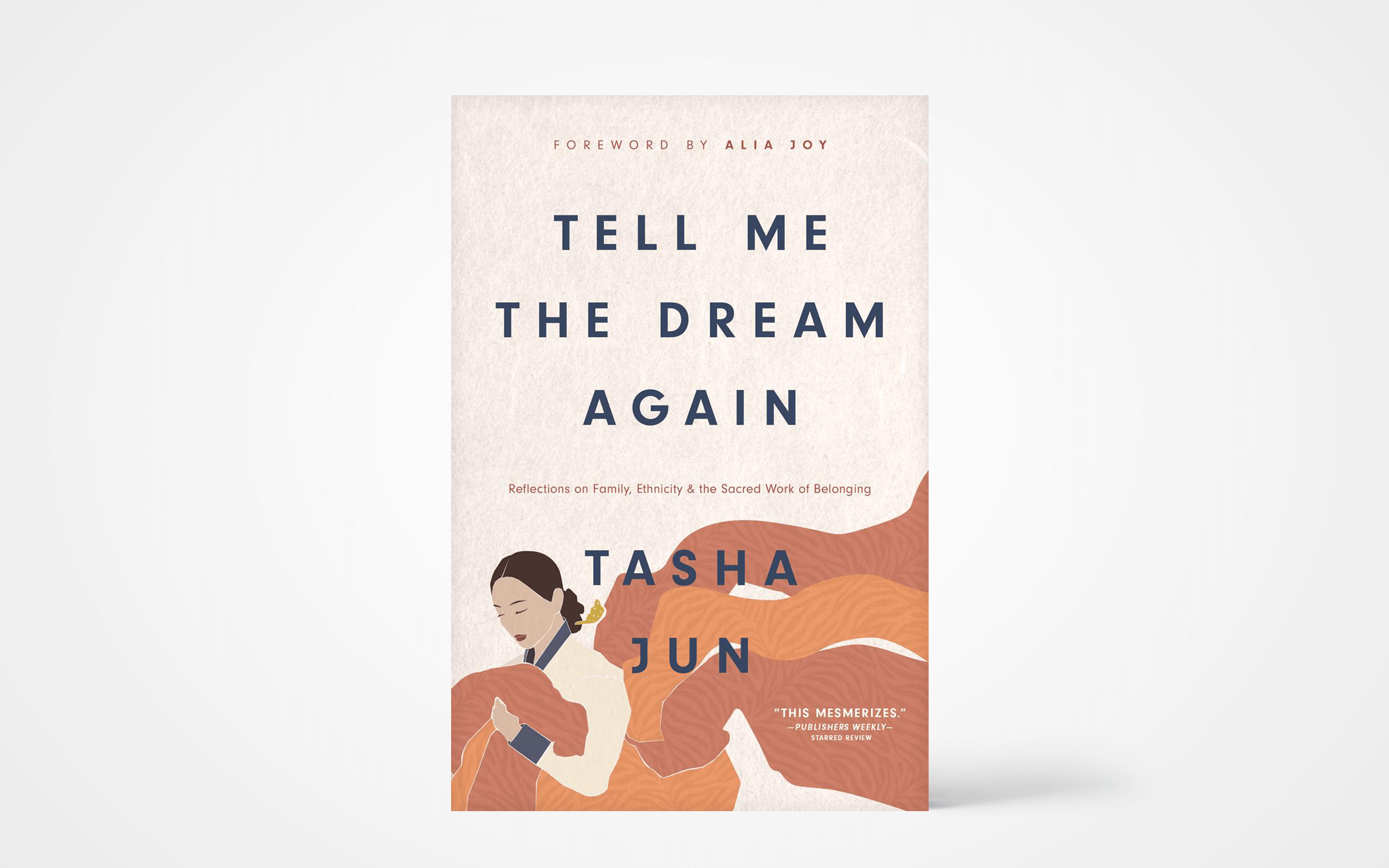
Tasha Jun is a half-Korean American writer “caught between worlds,” who writes about ethnic and cultural belonging, identity, and faith. As a biracial child myself who grew up in an American and Asian blended house, I was thrilled to see a similar representation in the upcoming 2026 Festival of Faith & Writing, and enjoyed her book, Tell Me the Dream Again: Reflections on Family, Ethnicity & the Sacred Work of Belonging, which thoughtfully acknowledges that “home,” for many who come from multicultural backgrounds, is a difficult thing to pin down.
Jun dives into the insights and wisdom that emerge from her Asian-American experience while thoughtfully exploring her Korean heritage through her mother, who’s first-gen Korean with living memory of the Korean War, contrasting that with her father’s white, Dutch American heritage. She tells of her wrestling with her identity and sense of not belonging, tying in her faith and working towards an acceptance of an overarching identity found in her relationship with Christ.

I enjoyed this collection of reflections for their gentleness and honesty. The author doesn’t shy away from the hard stuff she’s been through and doesn’t sugarcoat the complexities of her personal situation. She’s upfront about how her Koreanness ‘othered’ her and often felt like a barrier growing up in the States, and I liked how she expands this experience beyond herself to others in her community and through the generations of her mother and then her own children.
A specific slice of wisdom that felt meaningful to me was when Jun identified the requirements for healing as “tenderness, space, and time.” For the author, she recounts the generational trauma present in her family, even touching on epigenetics and Han, a Korean philosophy of deep sorrow or suffering often rooted in history (the example given here being that birds “sing” in English but “cry” in Korean). Ultimately, families and personal histories can be painful and confusing, but that’s okay. Though these experiences are unique to each of us, we aren’t alone in those complicated emotions. The author introduces this idea of “shalomsickness,” this longing for shalom, a peace and belonging that will bring everything together that we can’t make fit on our own.
Being accepting of our discomfort, and being willing to sit in the loneliness and unbelonging that comes as an authentic experience of life, is itself a form of comfort.
And it also can be beautiful. I was reminded of Christian Wiman’s session during the 2024 Festival where he shared Anne Carson’s poem “God’s Justice,” suggesting how, in our pain and longing for shalom, sometimes, maybe, perhaps, the theophany in the whirlwind’s answer is that “beauty is justice.” When we wrestle with something as fundamental as who we are, I felt that Jun was able to pinpoint the beauty in that complicated identity as well.
All in all, Tell Me the Dream Again offers valuable insights into the Asian American experience, but also the less-discussed mixed race experience. But it’s not only for these specific audiences; these reflections stand as a welcoming encouragement for each reader to lean into their own backgrounds, identities, familial and cultural complexities with a greater confidence in our identity as God’s children. This is a good, small piece of reading that lends just enough to chew on, and just enough expansion to this vast world.