Dialogue Then and Now: Continuing the Conversation
Along with warm spring rain, April ushers in the final glorious hurrah of the arts here at Calvin. The annual Spring Arts Festival is in the midst of a flurry of preparations; Calvin’s first musical in over a decade premiers in just a week; and, of course, the Festival of Faith and Writing is in just days’ time. April brings with it an added creative intensity: assignments and workloads increase, the line between anxiety and excitement becomes ever more blurred, and productivity comes to a crescendo. The office of the Center of Faith and Writing is crammed with signs, folders, and boxes of t-shirts and tote bags as our staff completes the finishing touches for the Festival. Yet even after April 18, when everything has been neatly packed away and the office returns to a slower rhythm, there is another artistic occasion which my mind continuously returns to. For me, the advent of April does not only signal the arrival of Festival, it also signals the arrival of a new issues of Dialogue.
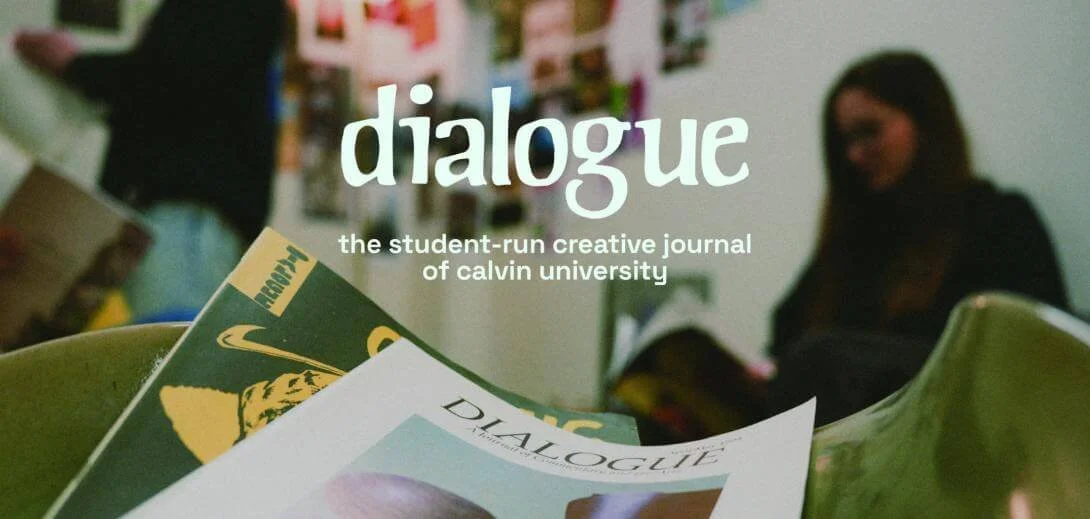
Dialogue is Calvin’s student-run creative journal. It has existed for decades, with issues tracing all the way back to the 60s. I have been on the Dialogue staff as an editor for two years, and it marks one of the first creative communities to welcome me at Calvin. While the contents of our issues have varied dramatically over the years, the journal has never failed to be a home for our students’ creativity. Writers, painters, graphic designers, photographers, sculptors, and more have the chance to highlight their work through Dialogue.
It is not entirely unfitting for my mind to dwell on Dialogue so near Festival. It too is the culmination of collaboration, a celebration of art, and a core aspect of Calvin’s literary tradition. But this year, it seems particularly relevant with both the past and present of Dialogue’s leadership contributing to Festival. Dialogue’s current chief of staff, Mar Schuurmann, is serving as a student host for essayist and poet, Ross Gay. Meanwhile, former Dialogue leader and author of books Lookout and Dirt Work: An Education in the Woods, Christine Byl, will herself be a Festival speaker.
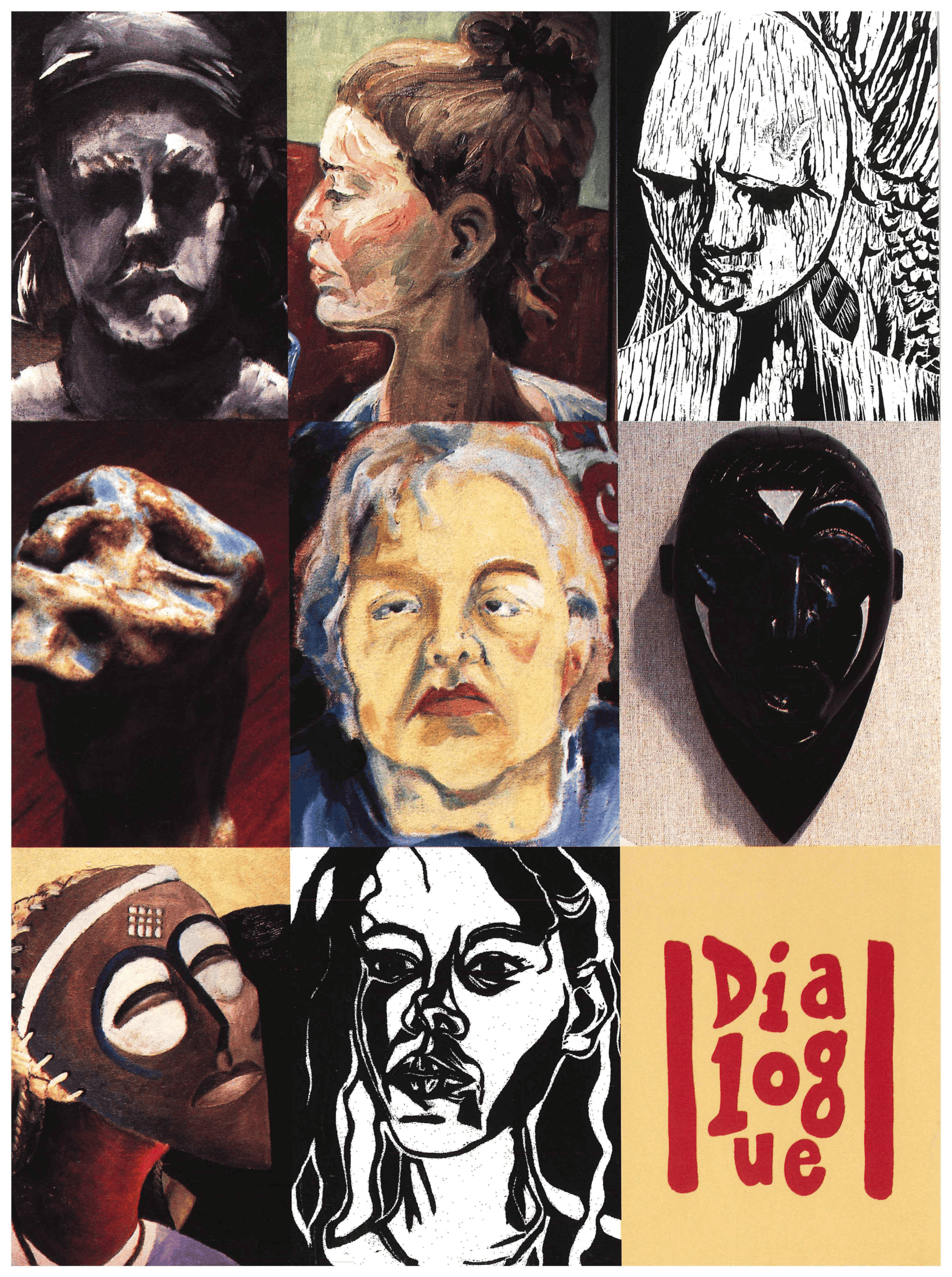
After a fellow member of staff mentioned Byl’s connection to Dialogue, I—with Mar’s help—did a deep dive into our journal’s past. Byl was on staff from 1994-1995, and acted as editor and chief for Dialogue: Issue 27. As I perused the issues Byl was involved in, the evolution of the journal from then to now is dramatically clear. Alongside the classic spread of photography, poetry, and visual art, I also discovered political and theological opinion pieces, a comic strip, and even one act plays.
As I flipped through the pages, I found Byl’s editorial note: “Hanging from the Tree of Knowledge.” Written over a decade prior to her first book, Byl’s reflective tone, strong descriptive language, and deep love of nature shines even in this brief essay. She describes her childhood belief in the sentience of the tree at the end of her block, and laments how education crowds out the enchanting possibility of believing in trees with souls. She points to a professor’s critique that her philosophy paper was “speculating” to illustrate that the more we know, the more it inhibits our imaginations. Byl writes, “Lately I am thinking about creation and expertise. About how knowing things makes believing things more difficult.” She wrestles with the conflict of education and experimentation as a college student, struggling to find creative freedoms in a minefield of scholarly limitations.
In a collegiate space where knowledge, evidence, and argument seem to be prized above all else, Dialogue provides a refuge for unbridled, uninhibited imagination. While I love every second of being on Dialogue staff, it’s the release party which will always be the magic moment. Every semester, as we set up the tables, cue the music, and prepare the food, I can’t help but wonder: Is anybody gonna come to this? Perhaps it’s a terrible thought, but I doubt, in the midst of projects and exams, that people will carve out the evening to share in our celebration. But each semester, without fail, people come. They set aside their academic responsibilities for an evening to laugh, talk, create, and share. And when the issues are distributed, there is not an empty hand in the whole place. Some even take two or three copies to share with family and friends. And finally, the culmination of a whole semester’s work: the silence. The silence as people sit, turn pages, read, admire, and review.
Every semester I wonder at the power of the creative community here at Calvin. I am reminded of the necessity of spaces like Dialogue, to gather, to celebrate, and to learn from one another. Like Dialogue, the Festival of Faith and Writing fosters conversation amongst an array of creative forms. A short walk from the Center of Faith and Writing office, Scott Erickson’s art is displayed in Calvin’s Center Art Gallery. Some of the speakers’ sessions will take place in the Gezon Auditorium, which will simultaneously be hosting Bye Bye Birdie. Calvin alumni, themselves leaders in the arts during their time here, will return to give back to the community once again. April 16-18 will be a highlight for me at Calvin as I witness the arts blending, intertwining, and serving one another.
The Festival is a time for creative conversation, sharing ideas, inspiration, and tools. Dialogue is named because art is nigh impossible without community, without conversation. Byl asks a compelling question in her editorial note: “Can dialogue bridge the gulf between imagination and knowledge, between the selves we are and the selves we pretend to be?” Byl’s concern that knowledge restricts us, prevents us from taking risks and exploring the bounds of imagination, emphasizes the essentiality of places designed to foster and protect the imagination. I offer her final words as a send off as we launch into Festival and continue the creative conversation: